
The Goldmine is running low, working standing around and somewhere beyond the fog an enemy army is advancing to attack our base. For fans of Real time Strategy games, this is a familiar panic. It was part o the fun. No other genres make us feel so responsible.
Games like Age of Empires, Warcraft, Starcraft and Battle Realms built their appeal around that feeling. Yet, the same studios that once helped define the genre rarely release an entirely new RTS game today. What happened?
The answer involves money, complicated game design and the difficulty in convincing the new genration of gamers who had their first game in their mobile phones to take command of a base and an army using their keyboard and mouse.
Big game publishers have not completely abandoned RTS games, for example The Age of Empires 4 continues to recieve expansions. Still, it's just one example. Let's look at Blizzard, the publisher who once defined RTS genre with Warcraft and then Starcraft games.
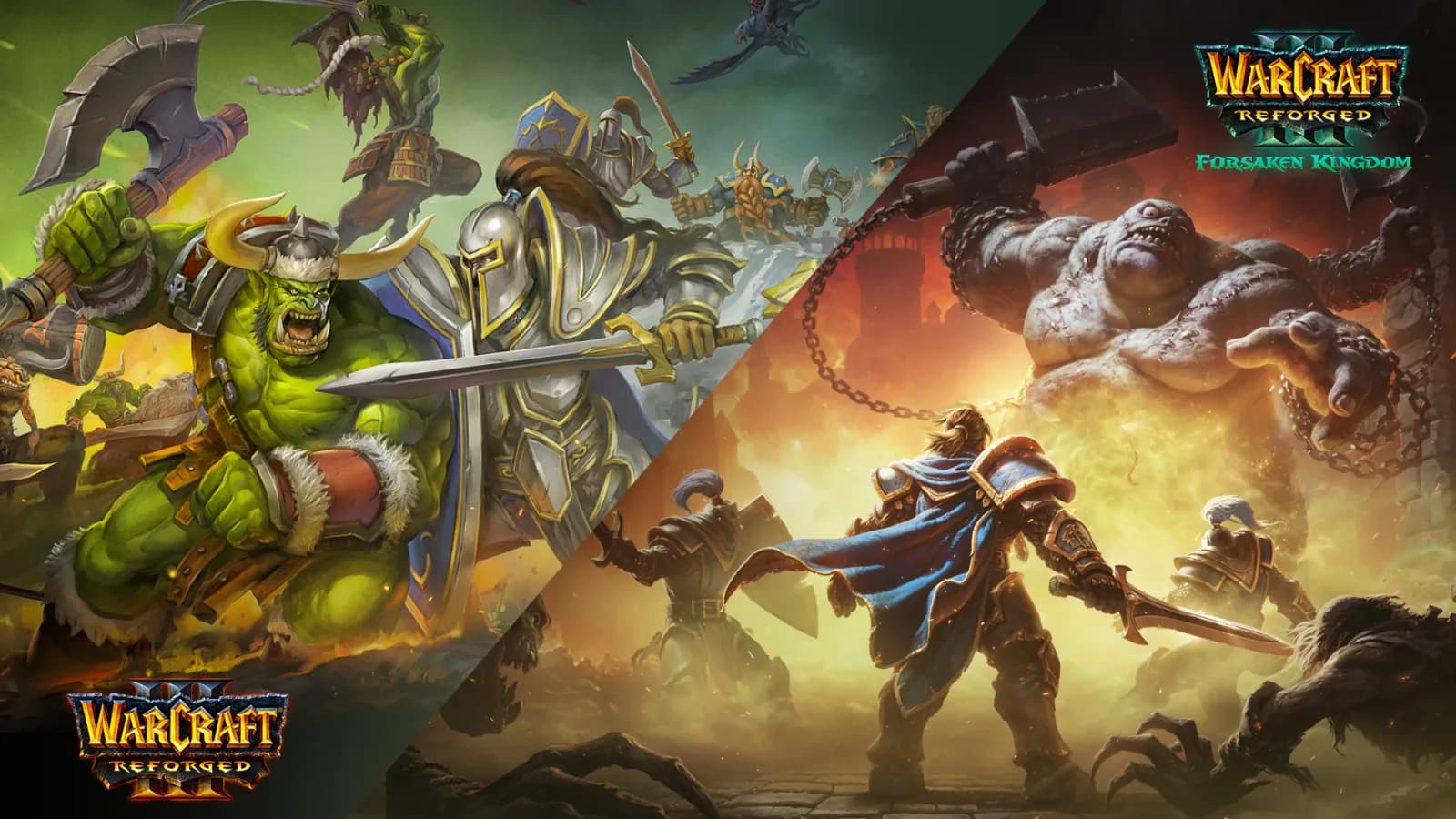
They gave players a base to build, armies to command, great heroes and a captivating storyline that made every level matter. As someone who has finished all campaigns in Warcraft 1,2, and 3, Starcraft 1 and 2, I naturally expected Blizzard to release Warcraft 4 and Starcraft 3. Both games had characters worth following and storylines that are far from complete.
Instead, Blizzard took the universe forward through World of Warcraft, which was originally released in 2004. In WOW, players entered Azeroth as individualplayers rather than controlling bases and armies, now they explore places they had previously seen from above.
It was enormously successful. By October 2010 WOW had more than 12 million subscribers worldwide. Starcraft never got it's third game.
From a business prespective the decision made by Blizzard is easy to understand. Players could buy expansions, keep paying subscriptions while remaining attached to their characters, guilds and friendships. They kept investing in WOW, leaving Warcraft 3 behind as it would have required its own team, years of development and a convincing case of how it would earn the ivestment back.
The business appeal is easy to understand. Players could buy expansions and keep paying subscriptions while remaining attached to their characters, guilds, and friendships. Azeroth became a place people returned to for years.
It's simple. When a different genre will give more returns for the same amount of investment, why would publishers invest in RTS.
An RTS game also has some surprisingly difficult development problems. Making an army look impressive is only the beginning. Every unit needs to move sensibly, follow orders, and respond predictably. When fifty soldiers try to cross a narrow bridge, the player expects them to manage it without turning the battle into a traffic jam.
Then comes balance. A small change to a unit’s price, movement speed, or attack range can affect an entire strategy. Different factions need to feel distinct while giving players a fair chance to win.
A strong campaign adds another layer of work. Interesting missions, enemy behaviour, voice acting, storytelling, and enough variety to keep every battle from feeling the same. Much of this effort is easy to overlook when everything works fine, but players notice and complain quickly and vocally when it does not.
Another big issue is the challenge of welcoming beginners to the genre. In an RTS, learning the controls is only the first step. The player need to gather resources, build the base, train units, explore the map, and fight. Often, several of those things at once.
An experienced player sees a series of connected decisions. A newcomer may see six emergencies competing for attention. That pressure can be exciting, but it can also make early defeats confusing. Maybe the army was too small or the player attacked too late. Perhaps the real mistake happened ten minutes earlier when you stopped training workers.
Campaigns, adjustable difficulty, and cooperative modes can make the experience more welcoming. Still, developers must work hard to show beginners the fun before frustration sends them away.
StarCraft II illustrates both the strength of the genre and the challenge of sustaining it.
Its Terran, Zerg, and Protoss armies offer very different ways to play. Learning them can keep someone interested for years. Its campaigns also show how an RTS can deliver character, spectacle, and inventive missions alongside competitive battles.
Blizzard explored ways to support the game beyond its original releases, including paid cooperative commanders and cosmetic content. But in October 2020, it announced that it would stop producing new paid content, while continuing balance changes and other support.
That announcement did not mean the game had failed or its players had disappeared. It showed that even an established RTS could reach the end of its major commercial content development.
A sequel would face another awkward challenge which is competing for the time of people who already love the previous game.
For AAA game studios to focus on RTS again, the business should make sense. The return on investment should look promising. There are still a lot of fans of the genre, things could change if one game by a new studio release a game which becomes widely successful bringing in new players to the genre and revitalising it.